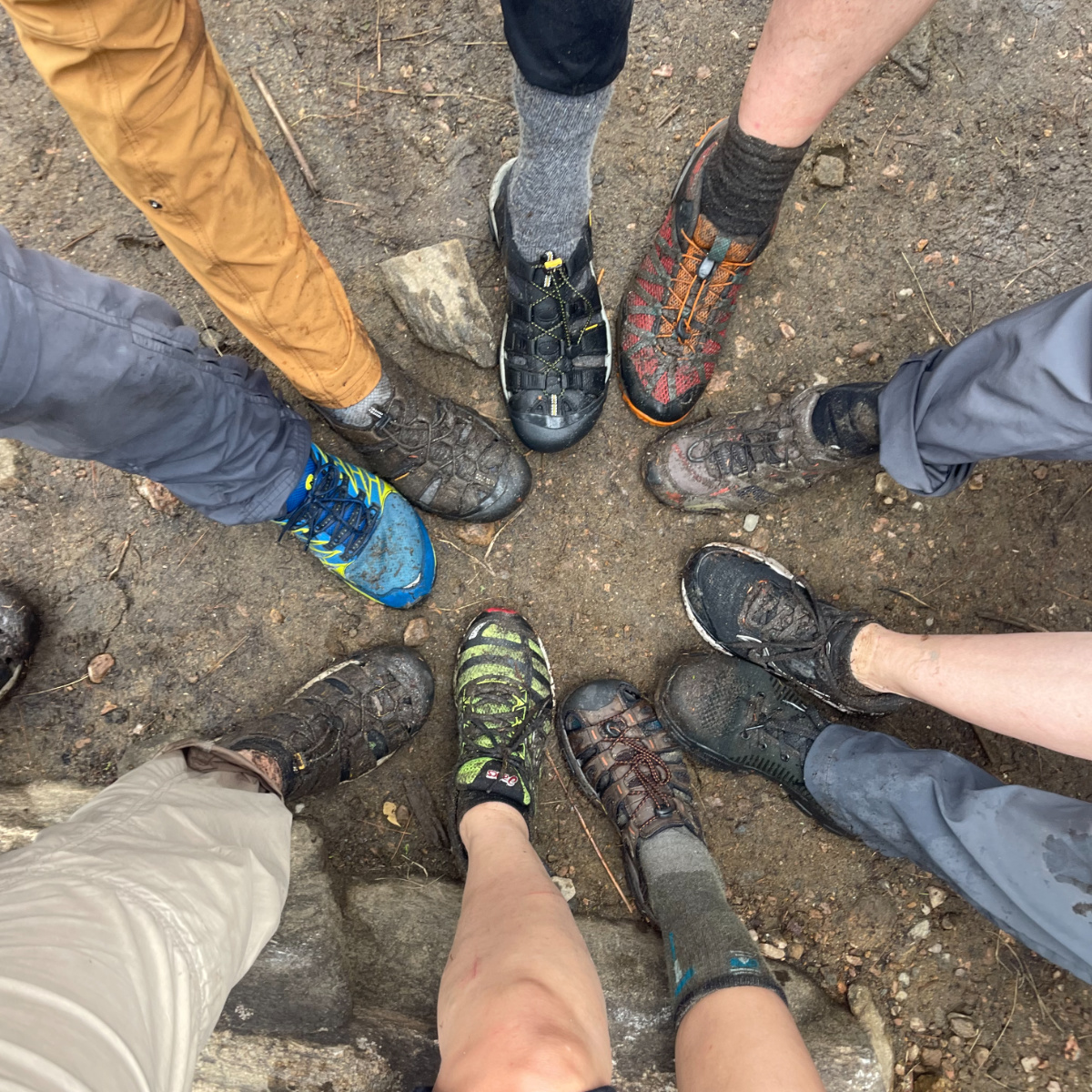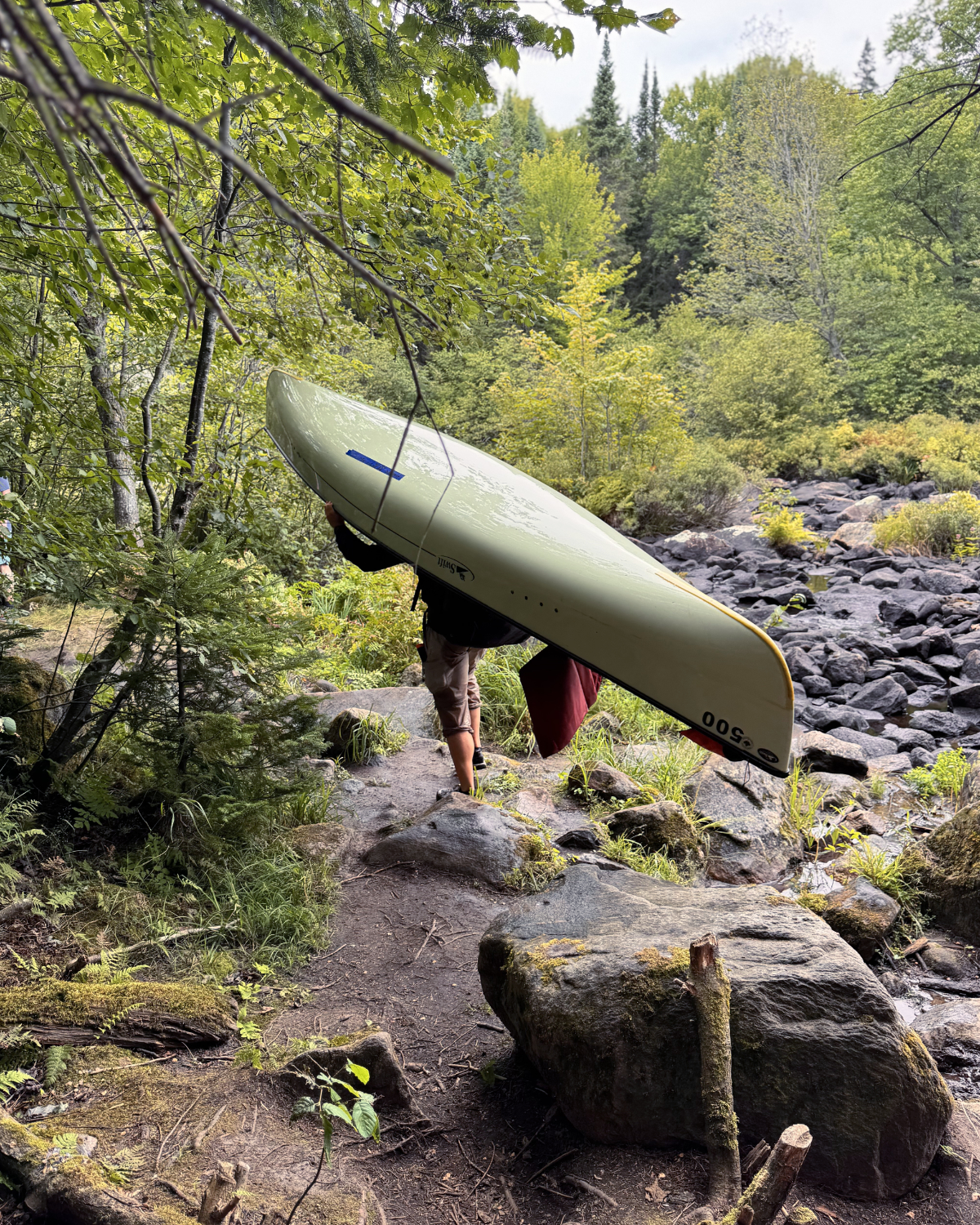
The straps of the 120-liter pack relentlessly dug into my shoulders, and I felt my arms go numb as I balanced a canoe overhead. Hiking with interspersed hops and shrugs provided only momentary relief.
But this was exactly the kind of challenge I had been craving.
I was with a ten-person team in the Canadian backcountry of Algonquin Provincial Park, portaging and canoeing for 5 days. The team had an eclectic mix of experience: from professional storytelling, carpentry, photography, publishing, and ministry to large-animal doctoring, seasoned backpacking, tree-trimming, physical therapy, and engineering. Despite each of us being reduced to a dry bag and whatever we could attach to our person, no one fit neatly into a single skill set.
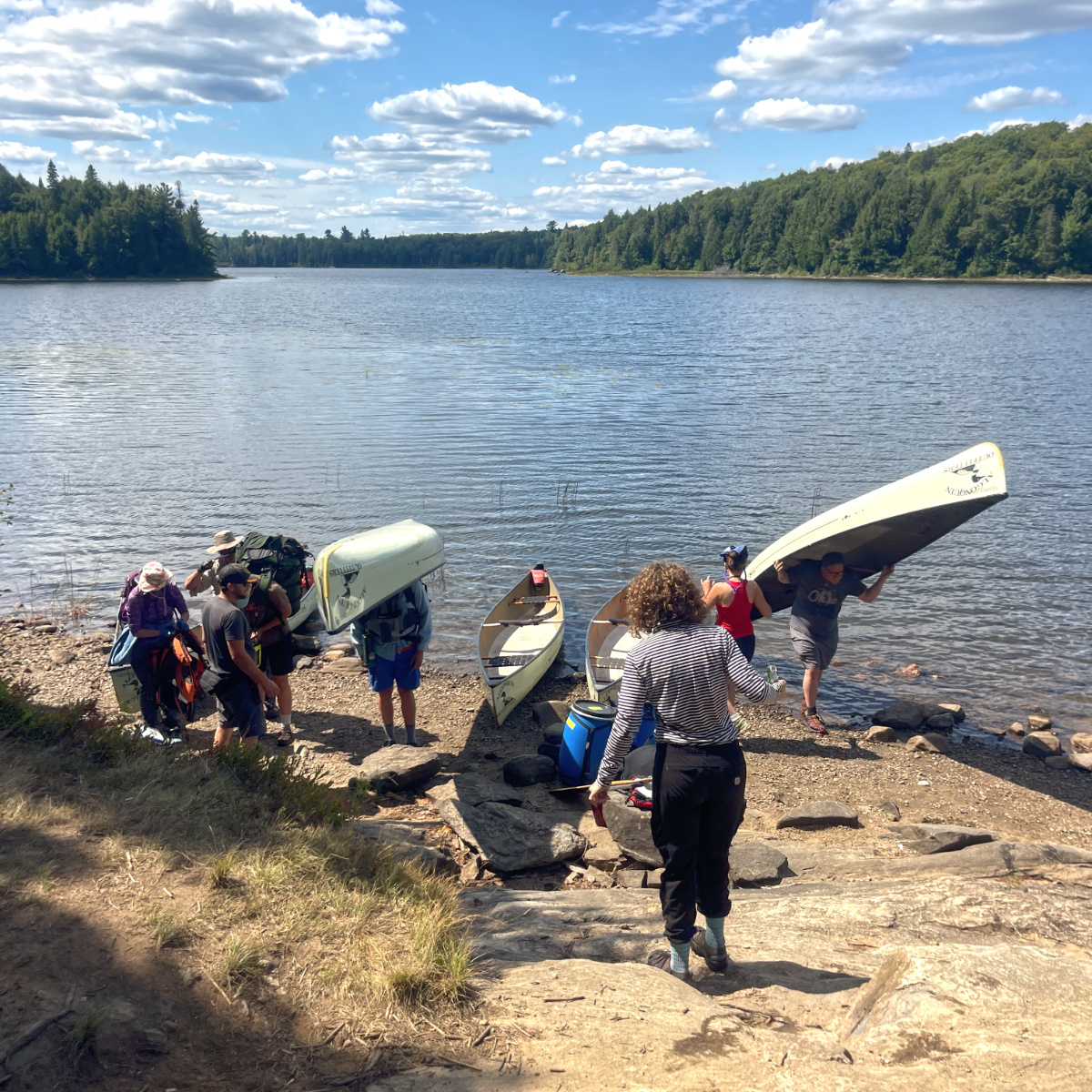 (Pulling in to set up camp.)
With that mix of experience setting out into the wilderness, I learned a lot and that learning began at the outset.
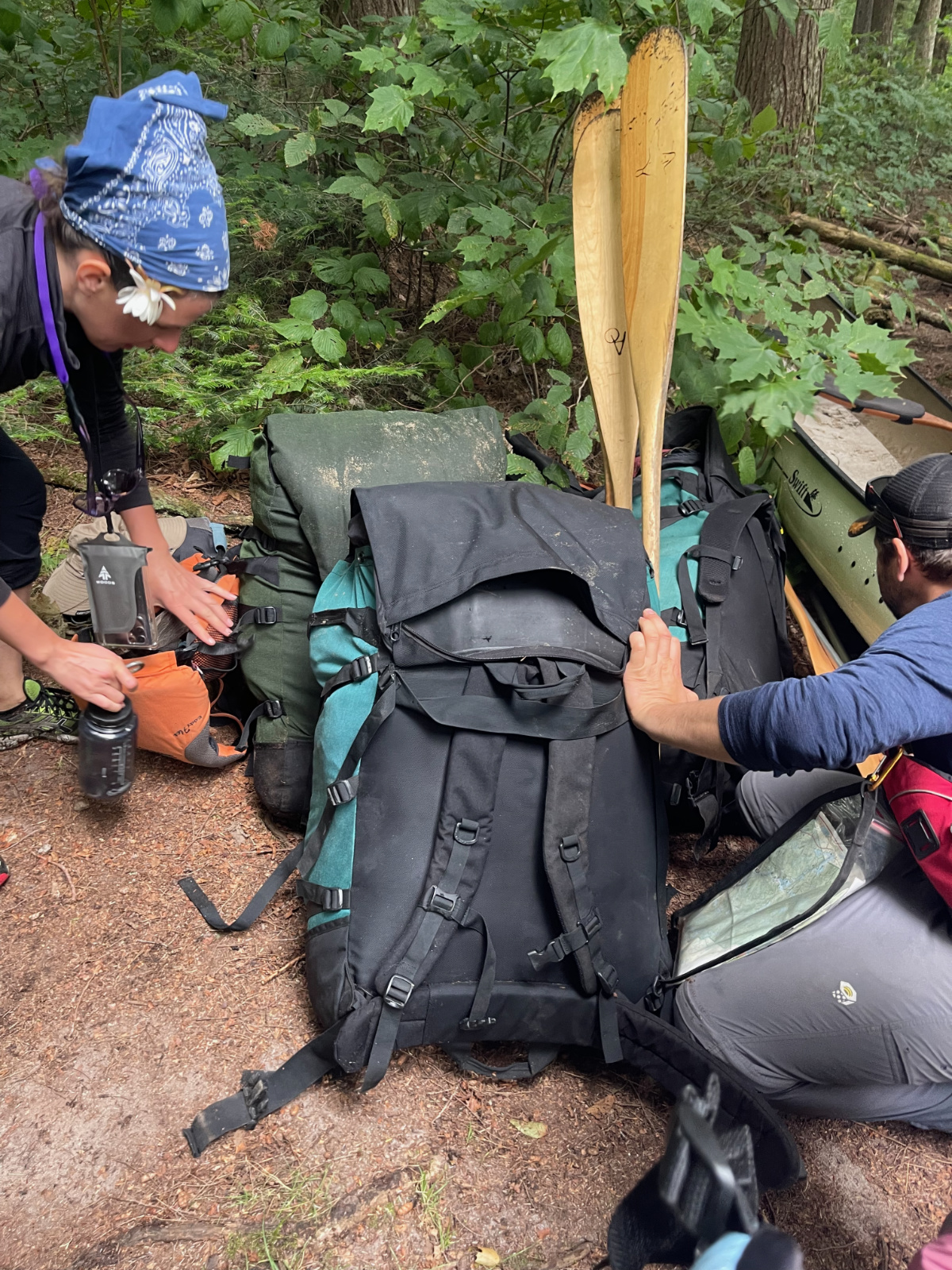 (The large, 120-liter packs that carried all our belongings.)
Before departing, our veteran Algonquin guide led us through the ritual of the "shakedown". Everyone's gear was to be evenly distributed across bags and bear barrels, regardless of how heavy or light you originally packed. As items were reviewed, most drew nods of approval, some raised eyebrows, and a couple sparked pure awe (namely when an entire sleeping bag, mat, and pillow were the size of my compressed clothes sack).
Each of us had a unique item that said as much about us as our initial introductions did (e.g. a small DSLR, a portable fishing rod, and impressive homemade dehydrated everything). These items gave insight into what each team member personally found important and the expertise they brought to the group.
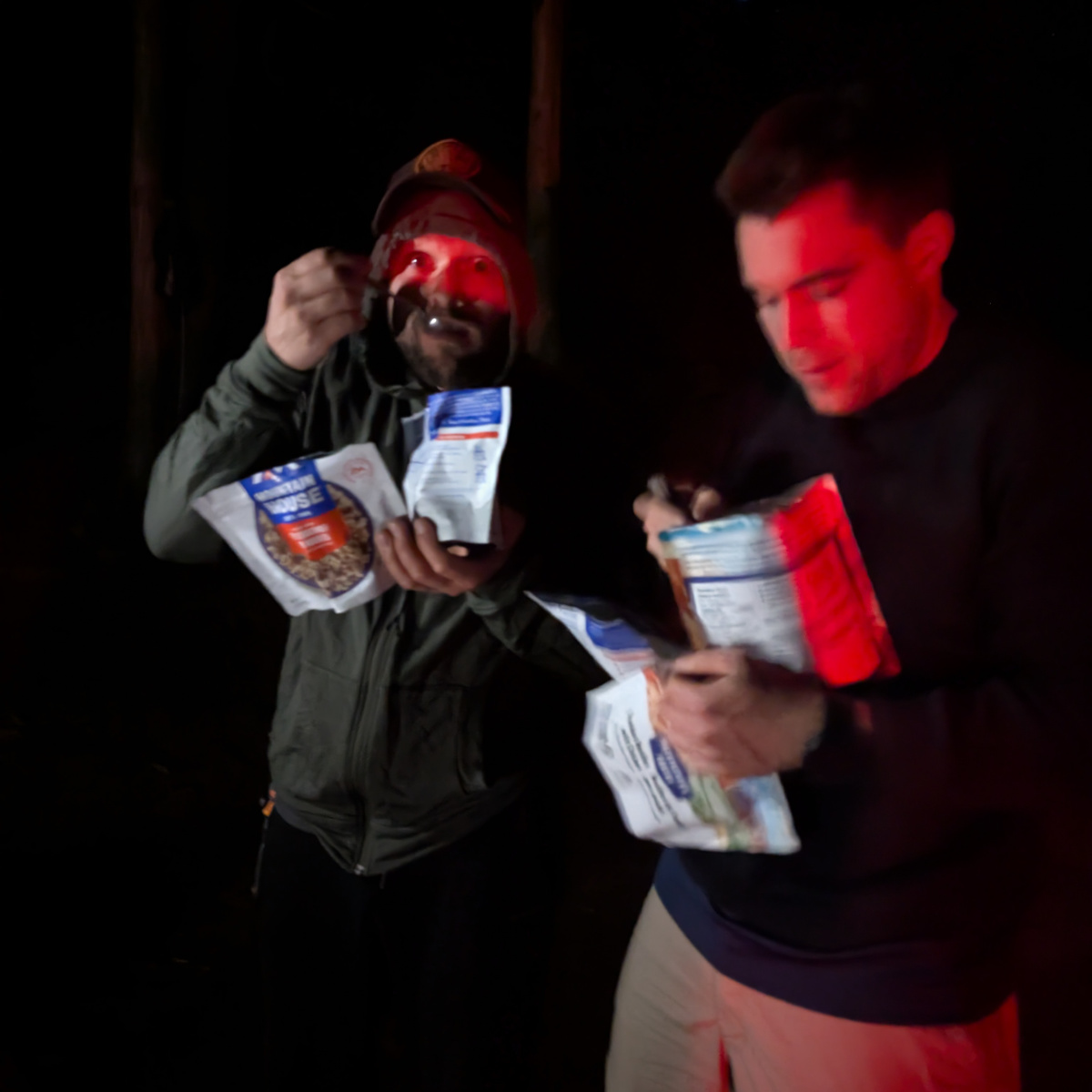 (Honored to be part of the Leftovers Crew.)
Beef sticks for bartering, an insatiable desire to carry heavy things, GoPro equipment, and the ability to eat any and all leftovers were my areas of contribution.
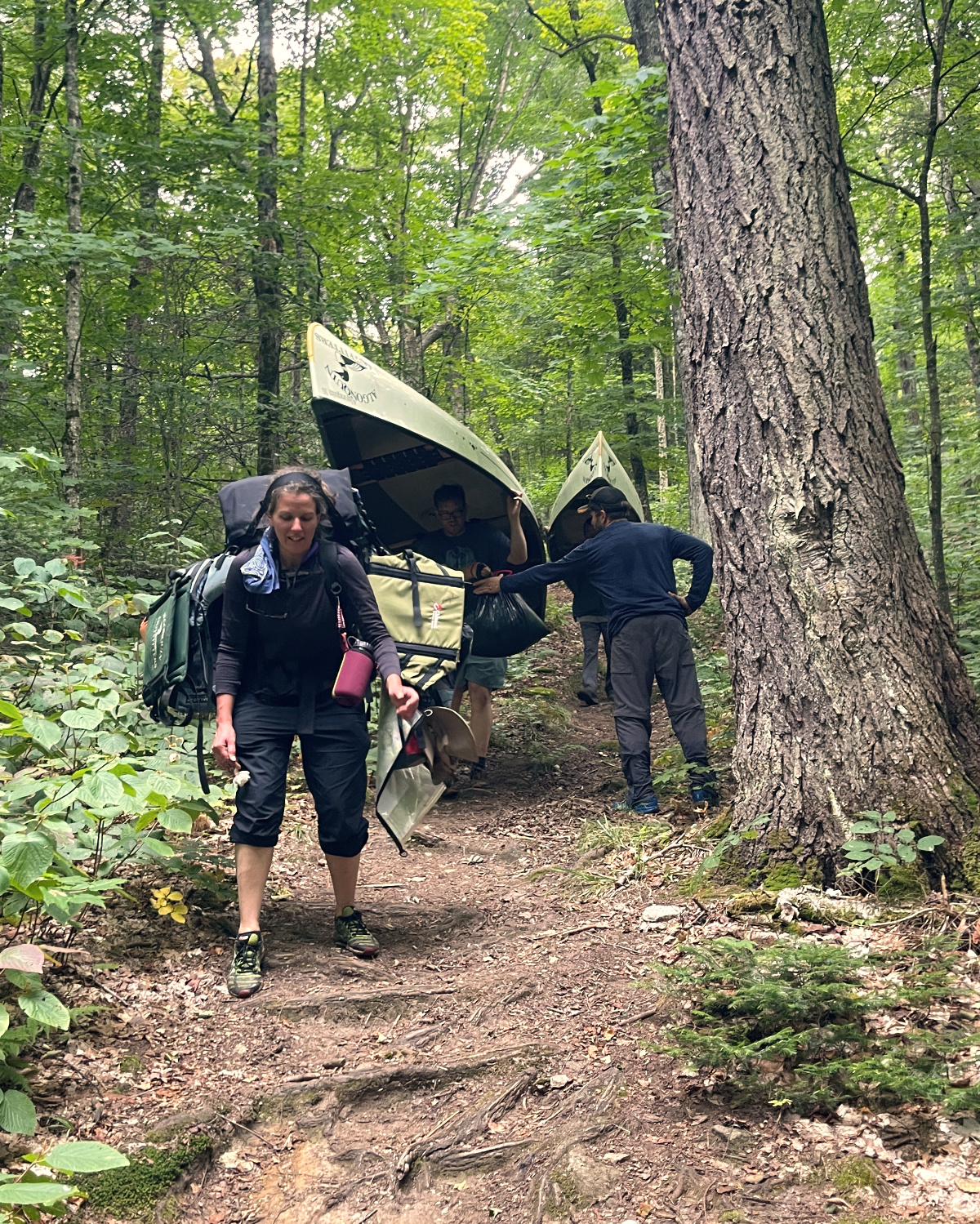 (Hauling our gear—carrying setups varied from portage to portage.)
Now leaned down, our journey began in Rock Lake, launching us straight South until our first portage. Only about a quarter-mile long, this first stretch was a great initiation to carrying the 50lb canoe over steep, rocky inclines. Team members would carry the canoes individually, sometimes adding an extra 50-70lb pack or bear barrel.
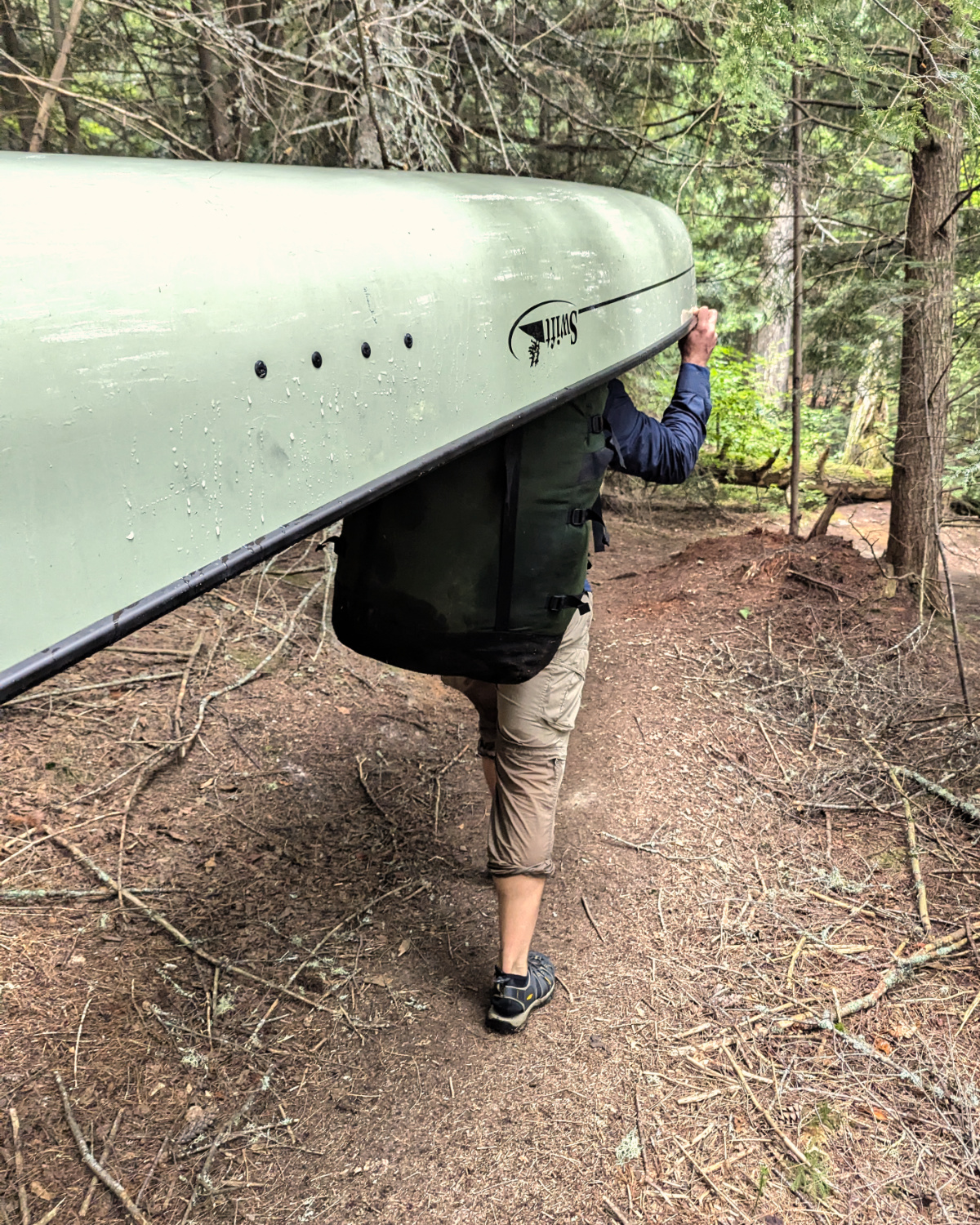 (The canoe-and-pack portaging combo.)
There's something about carrying a heavy load over a distance that I find uniquely edifying. Yes, you're physically tested, but much of the testing happens in your head.
As the portages grew longer, the gear's weight burned more intensely, and the internal chatter became louder. At a certain point, you have to address that chatter. But, your two options are both genuinely hard: it's hard to stop and take your gear off, and it's hard to persist.
Standing there gets you nowhere.
Sometimes, you choose to take a breather and reassess—awkwardly working your canoe and pack off, only to do it in reverse a few minutes later. But sometimes, if you can detach from that frantic internal chatter, you can observe yourself more clearly—you can identify what's causing the pain, evaluate the true danger (concluding that you're not going to die), and then steadily persist in that state of "suffering".
I've far from mastered this—throughout the longer portages, I had a few moments where I needed to set my gear down and regroup. But, having this opportunity to work through that tension in choices—over and over again—was deeply rewarding.
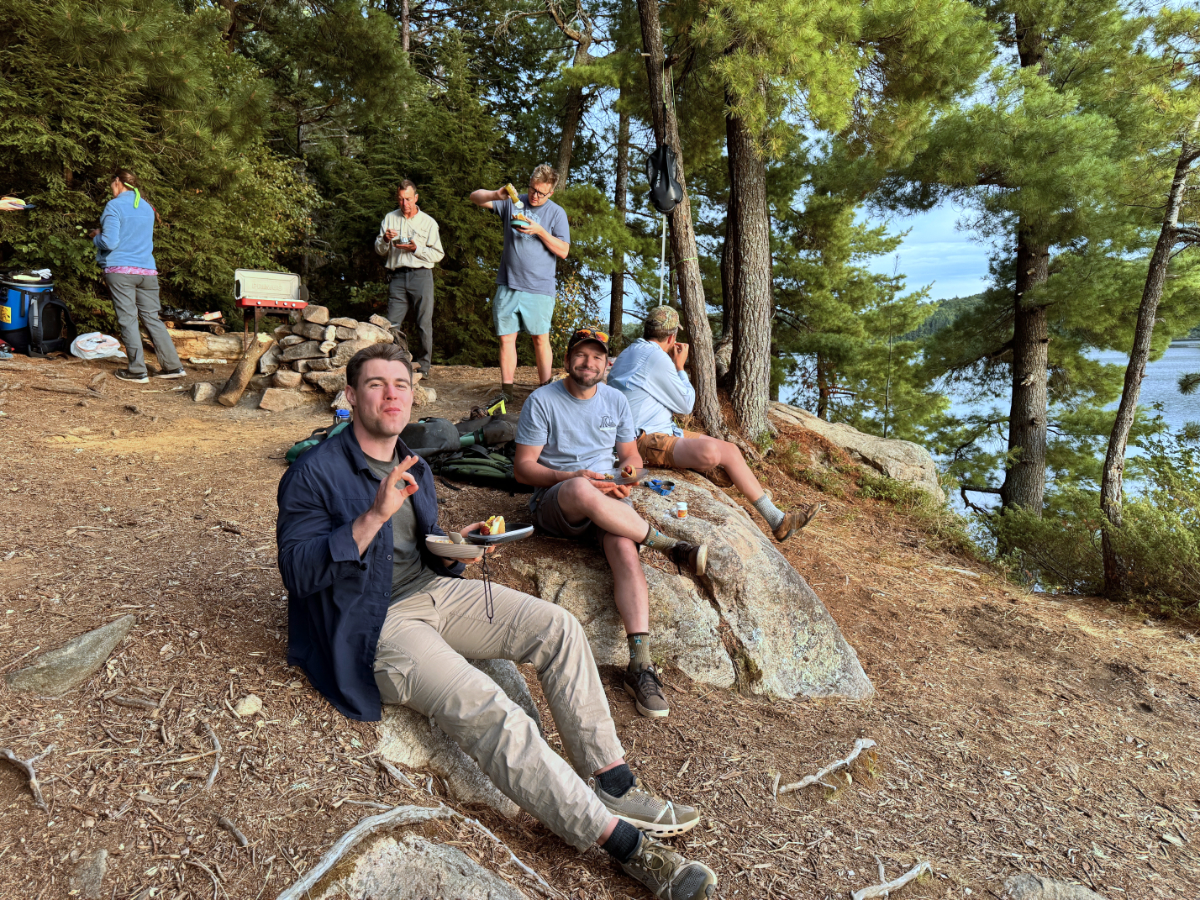 (Our first night in the backcountry. Good hotdogs and company.)
When we finally made it to our next canoe point, the group's energy was contagious. We had finished our first portage—many of us shouldering a hundred pounds of gear through the wilderness. I can't express how satisfying that feeling was (and every portage that came after).
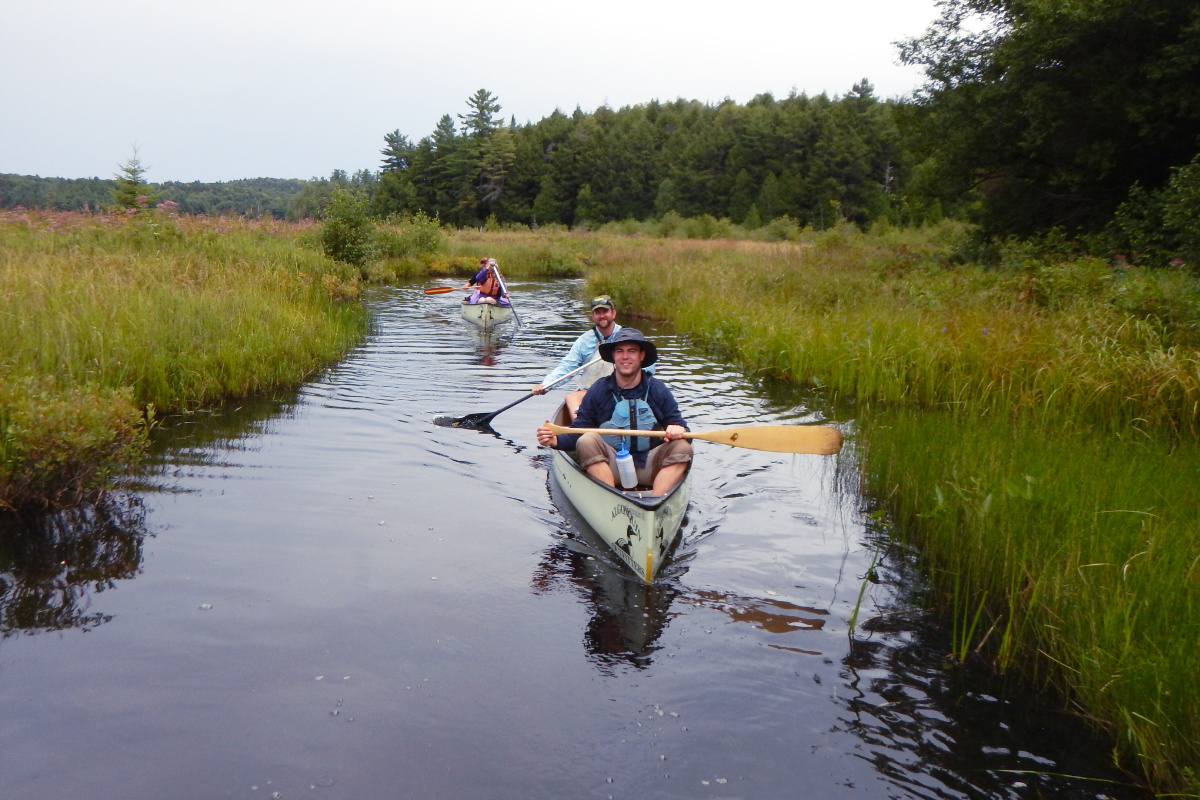 (Snaking through some shallow waterways.)
Our trip was near the tail end of summer and this year was an especially dry one. Canoeing-wise, this meant low water levels, snaky waterways to rudder through, and many more beaver dams to traverse.
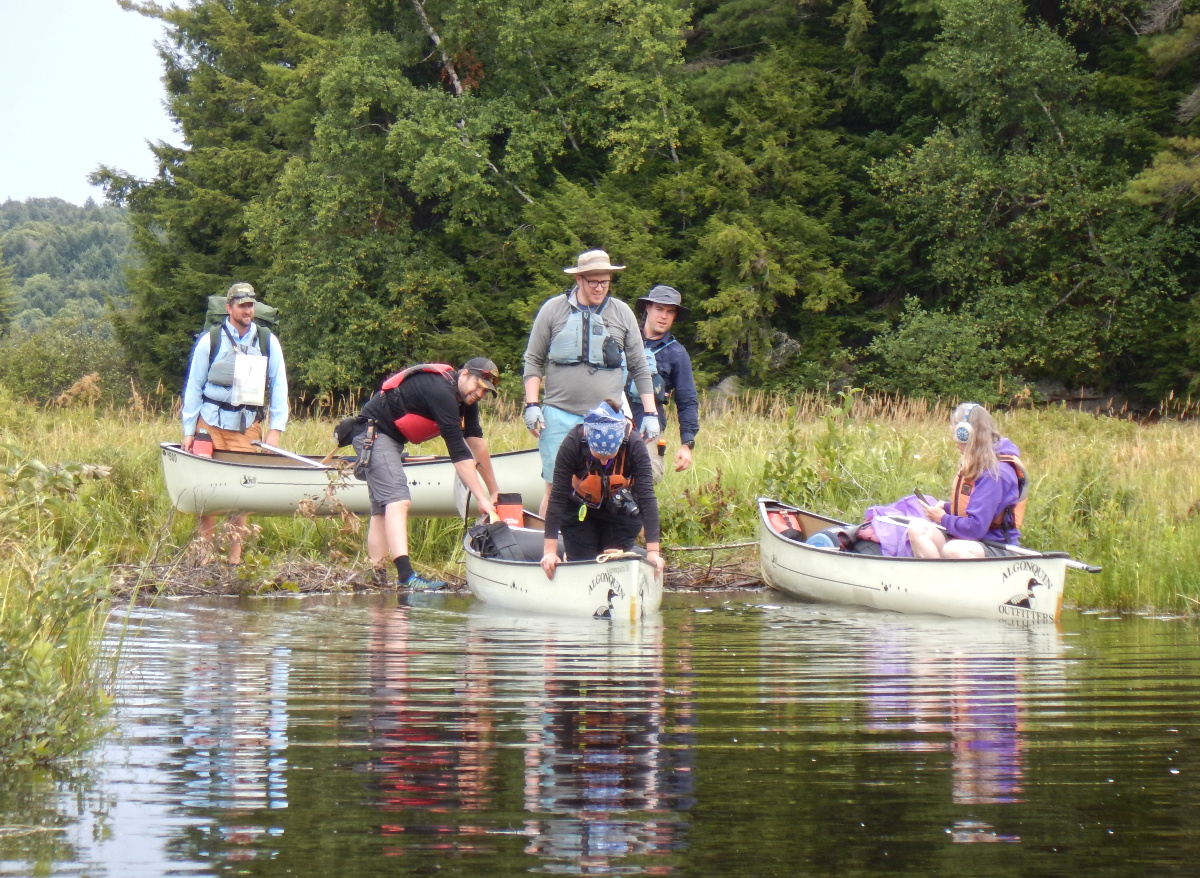
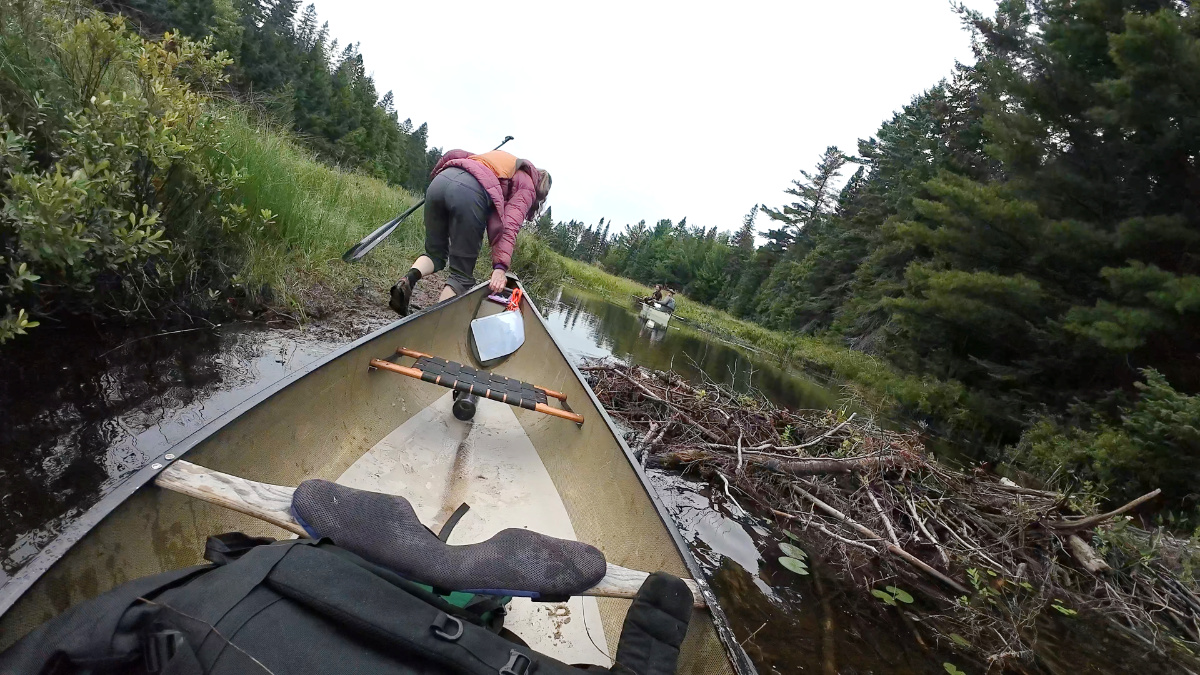 (My partner dragging our canoe across a beaver dam.)
At first, it was an awkward dance between canoe partners: one partner stepped out onto a bundle of muddy sticks and dragged the canoe over while the other steadied. Then, the partners switched. Exchanges could risk a canoe flip into the muddy bog, ensuring your gear stayed slushy for a couple days.
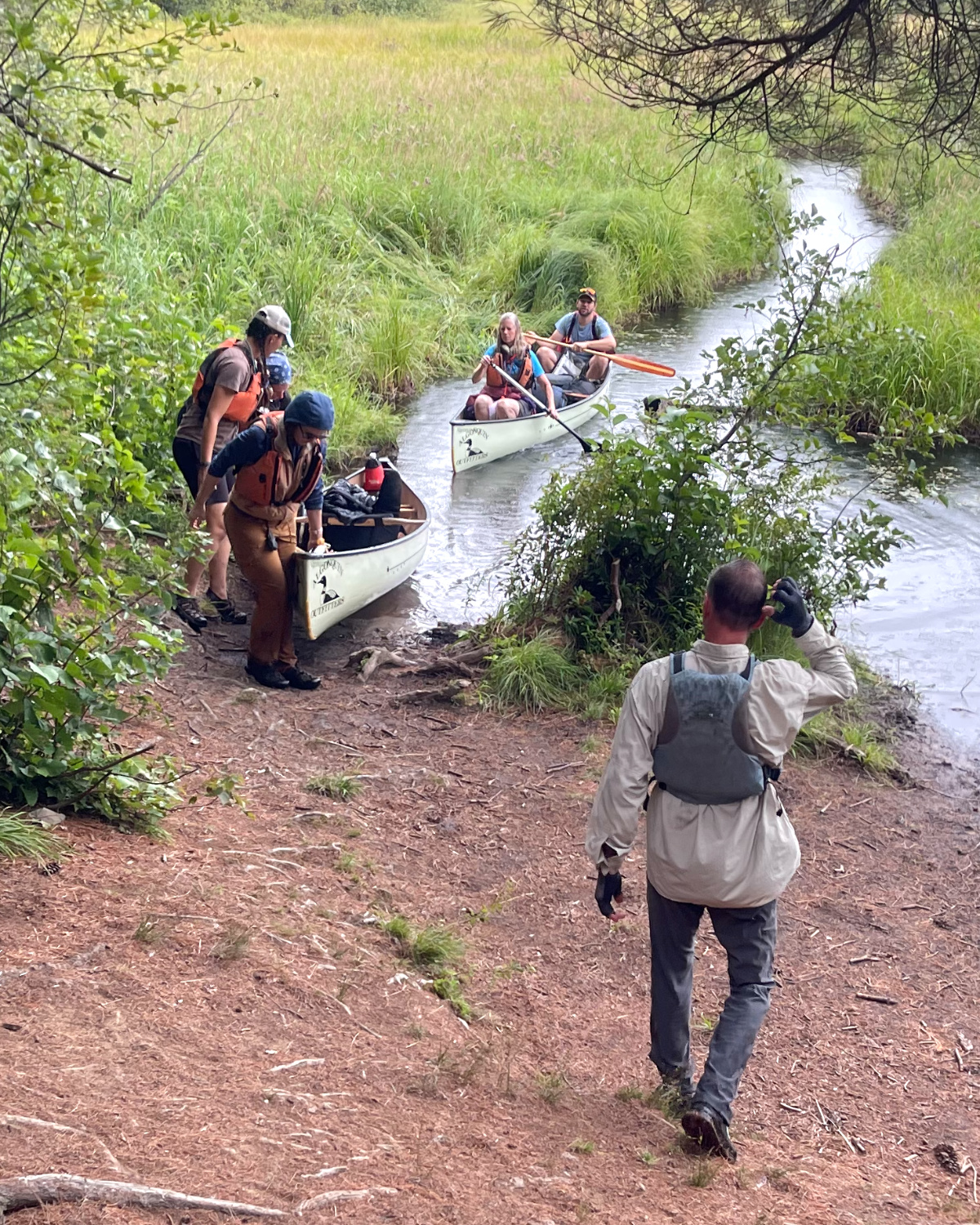 (Landing after the beaver dams and preparing for our next portage.)
But after the third or fourth dam (and a couple missteps), we started moving in a coordinated rhythm, predicting our partner's next move and counterbalancing to ensure a smooth transition.
I think I saw more beaver dams on this trip than I had in my entire life—let alone climb over them. This was honestly such a highlight of the trip for me.
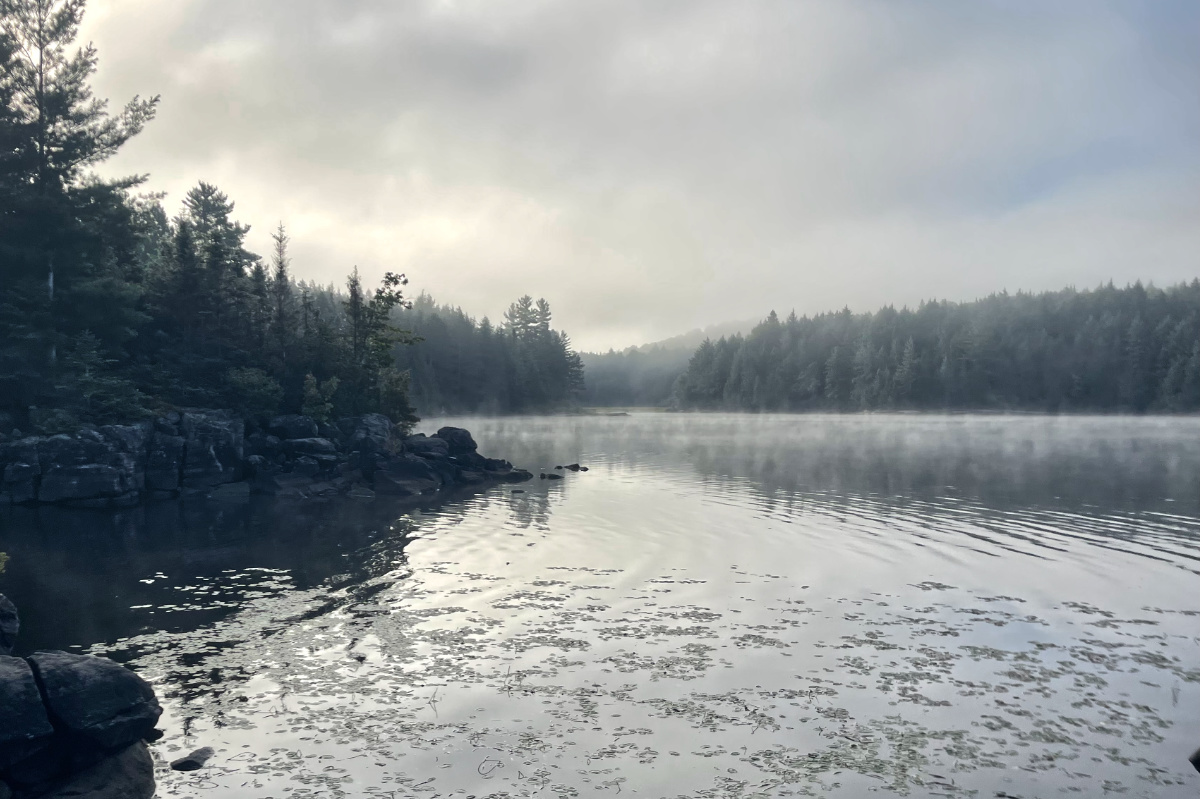 (A misty morning after a night of stargazing.)
Living in the semi-rural South, I've gotten used to nature being quite loud. Cicadas, frogs, birds, and general buzzing fill the air throughout most of the year. In Algonquin, aside from an occasional Loon turf war or stray cricket, it's pure silence—day or night.
A couple days in, you get used to that silence, forgetting that there are indeed many creatures out and about.
My naïveté changed after a few of us decided to have a quick rinse in a lake. Initially, I felt really good about it—plunging in cold water with a couple drops of basic soap was a real luxury compared to the nothing we had done so far.
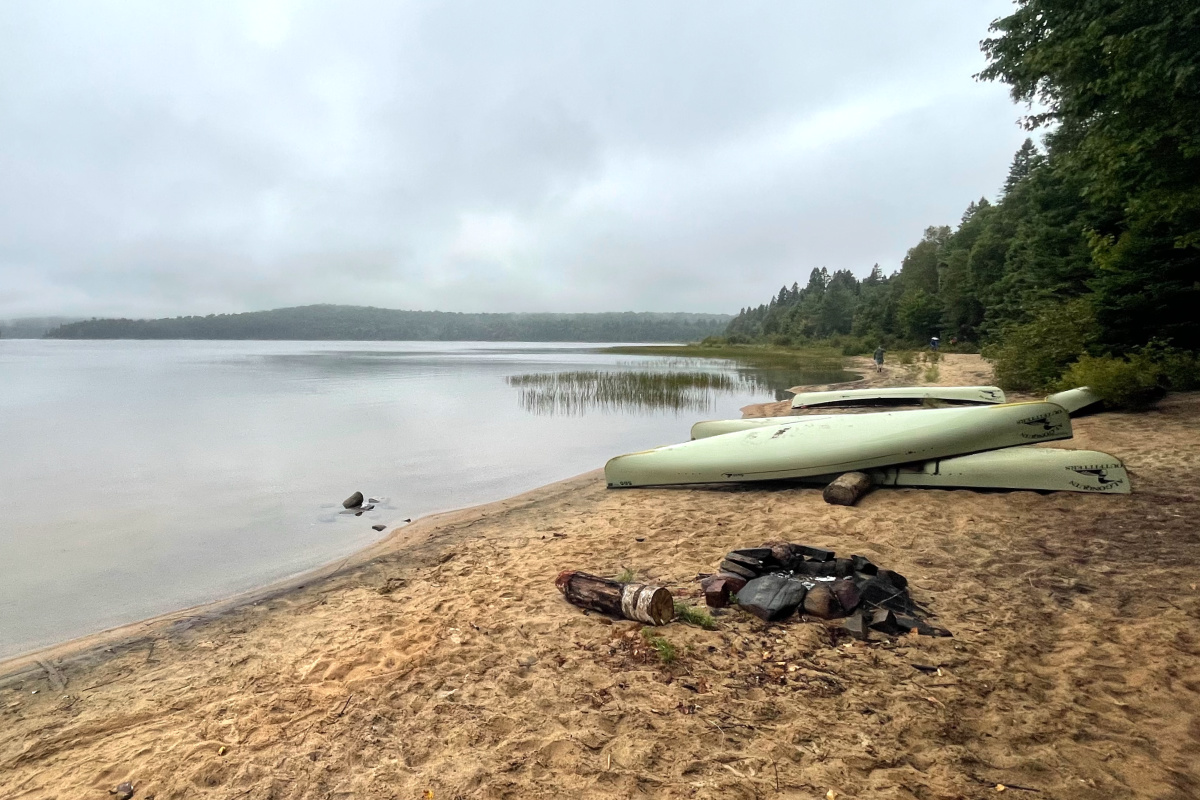 (Bathing in the lake was amazingly refreshing.)
But I abandoned those good feelings after our large-animal vet discovered something small. Right by the rocks where we had placed our shirts and towels was a pool full of squirming leeches.
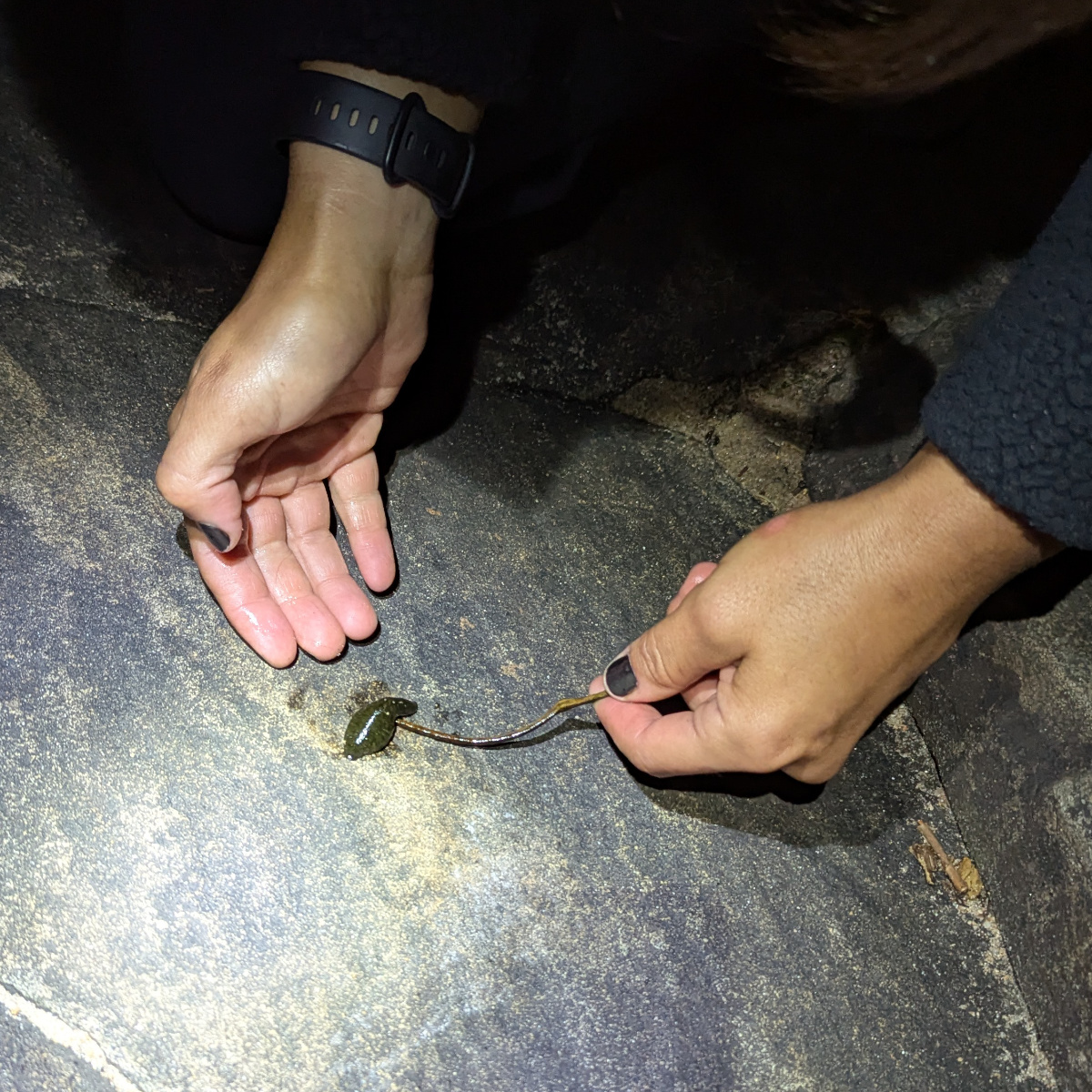 (Inspecting a leech.)
After some very thorough searching, thankfully no one, as far as we could tell, had become a host for a mucous parasite.
When bathing outdoors, this thought will never not occur to me again.
In Algonquin's typical silence, every little sound starts to carry more information about your environment. During one of our breaks, our large-animal vet (and part-time trivia host) explained Dolbear’s Law.
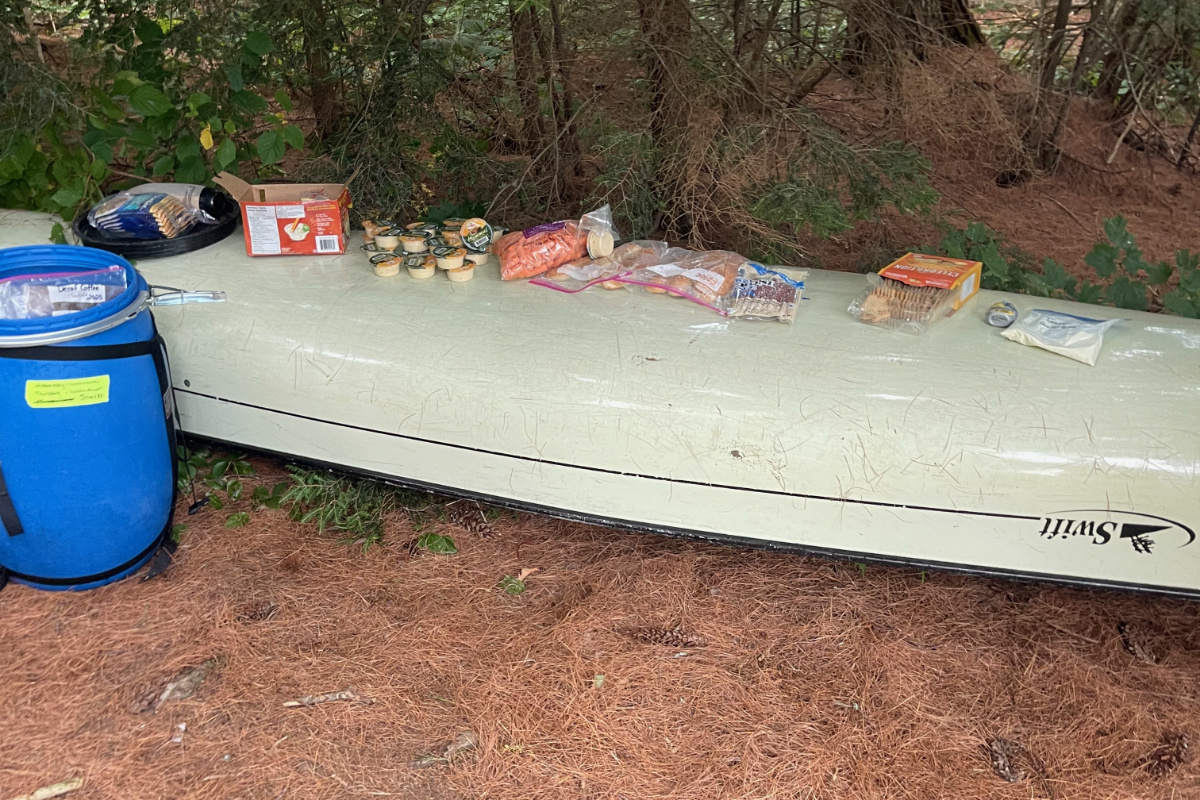 (A mid-day snack-break. This is not the use of crickets I'm referring to.)
If you measure the number of chirps created by a single cricket within 15 seconds and then add 40, you can actually determine the outside temperature (in Fahrenheit).
Luckily, we were able to find one of those stray crickets and test out the formula. We found a cricket to be accurate within 4 degrees compared to weather apps—not an essential survival skill, but fun nonetheless.
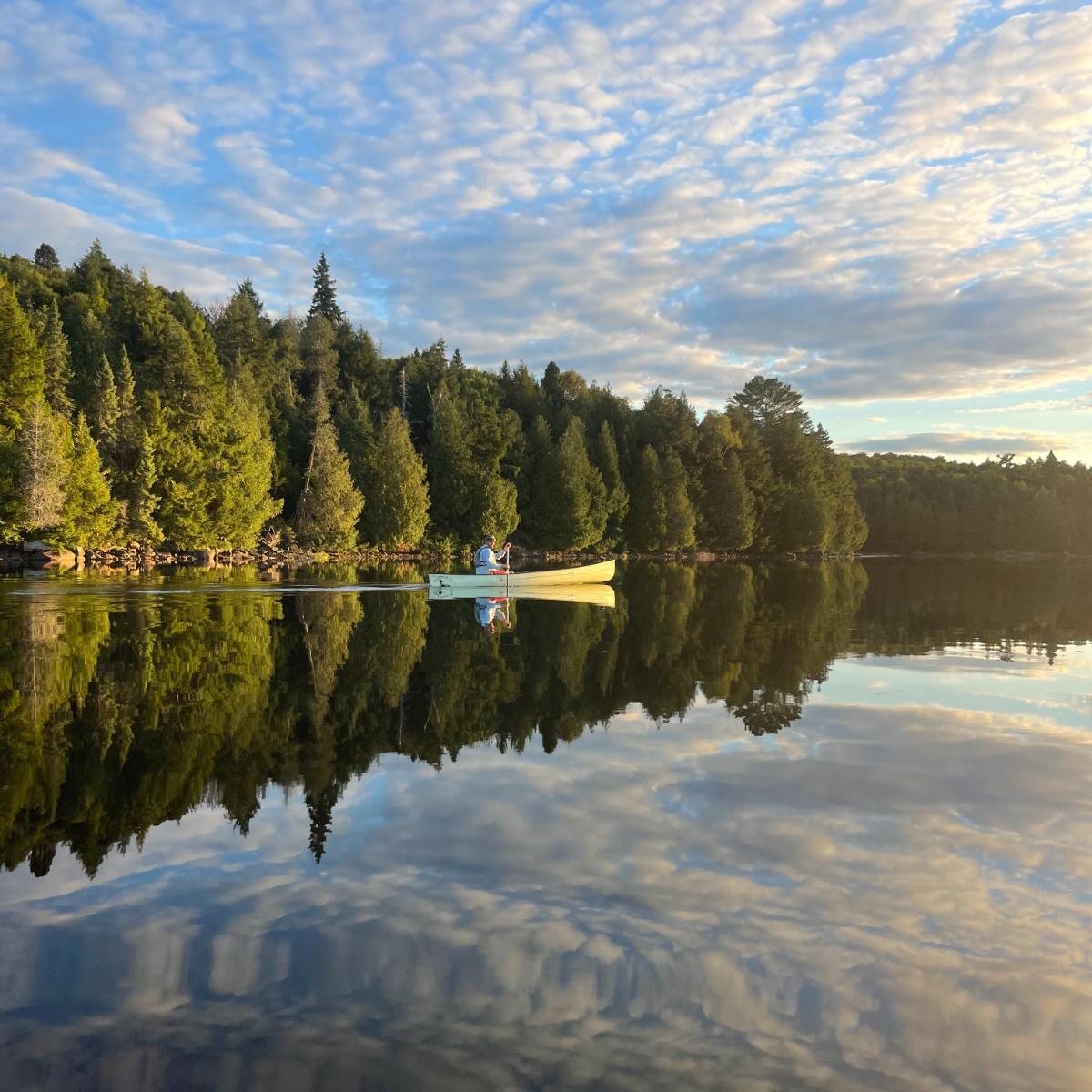 (Canoeing through glassy water at sunset.)
I have very few trips where I don't bring my DSLR—it's my favorite method for capturing the journey. However, bringing the extra weight and the risk of its absolute destruction meant getting to know a new piece of gear: my DJI Osmo.
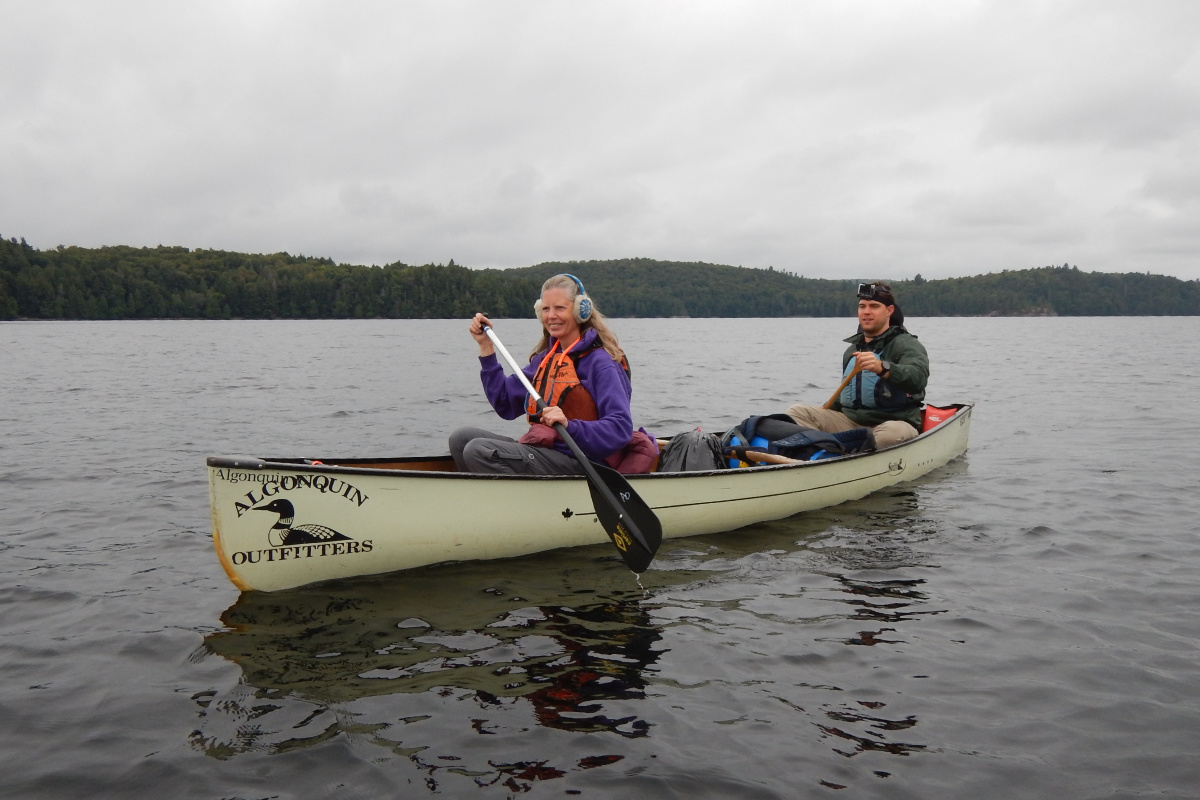 (Experimenting with strapping the Osmo to my forehead.)
Similar to a GoPro, the Osmo is primarily for videography. This meant that I couldn't depend on framing up stills like my DSLR—even with its "point-and-shoot" mode. As the Osmo has a set wide field-of-view and only an LCD for a viewfinder, and was sometimes strapped to my forehead, I started learning how to "see" like a compact action camera rather than a modifiable DSLR.
That resulted in revisiting some "tactical" concepts:
- How do I position it on my head so that it actually captures the scene? (It actually needs to be angled down more than I thought)
- What adjustments will I need to make when shooting through a screen rather than a viewfinder? (Lean on cropping and video-frame extraction later)
- In what scenarios do I press record and just forget it's there? (A bit of an art form)
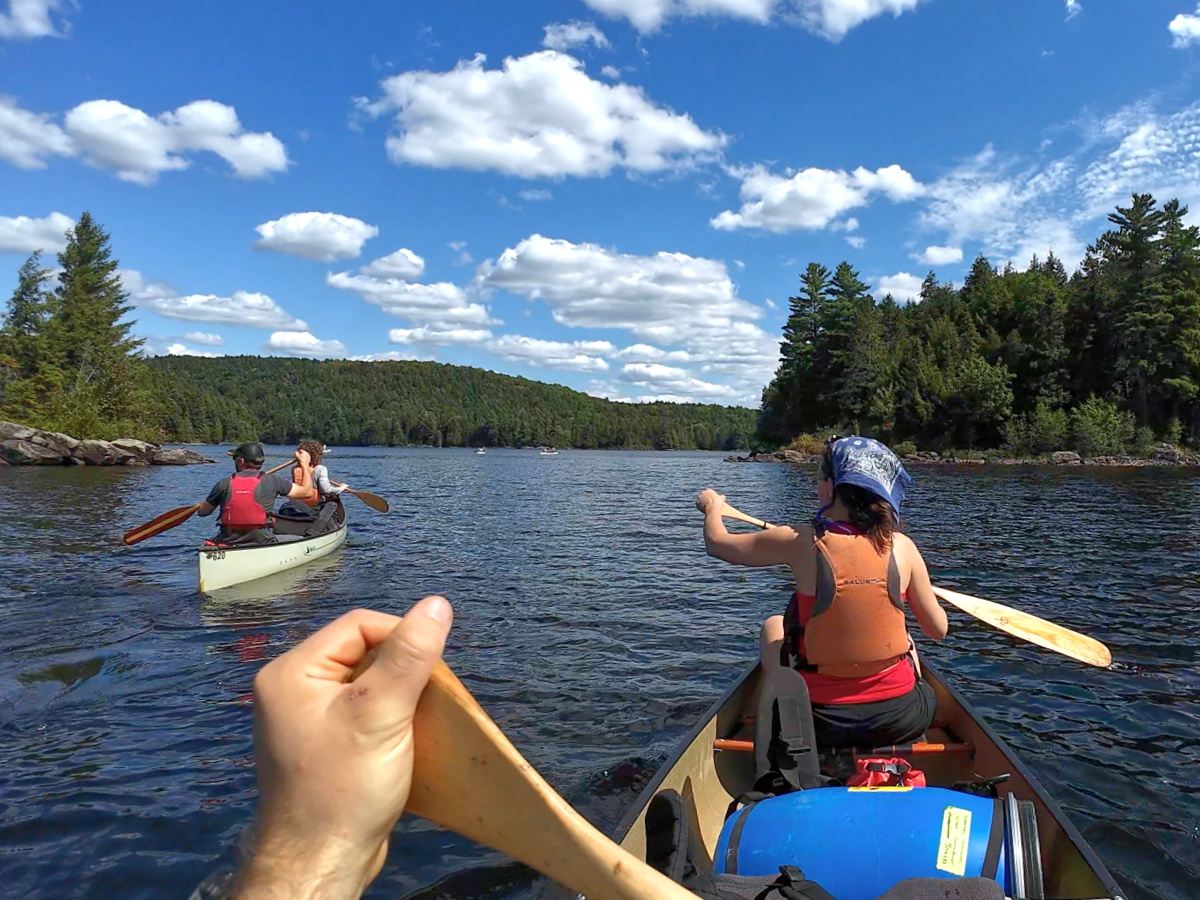 (An extracted still of one of our last paddles.)
This experience further rounded out my skill set and deepened my ability to compose regardless of the tools on hand. This made for a really intriguing challenge and one I'm continuing to dig into. In particular, I'm looking at this YouTube tutorial to better understand my Osmo's color settings and reduce that "plastic" look you get in some lighting.
I also learned from others who captured their POV on the trip—seeing what stories they told gave me insights into what I can pay more attention to next time, whether I'm capturing it or just experiencing it. For me, those insights looked like the little things that I grew accustomed to (like putting up camp, cleaning the dishes, filtering water, or just standing and enjoying the view). Having these moments highlighted was an unexpected bonus that added to my appreciation of the team and experience.
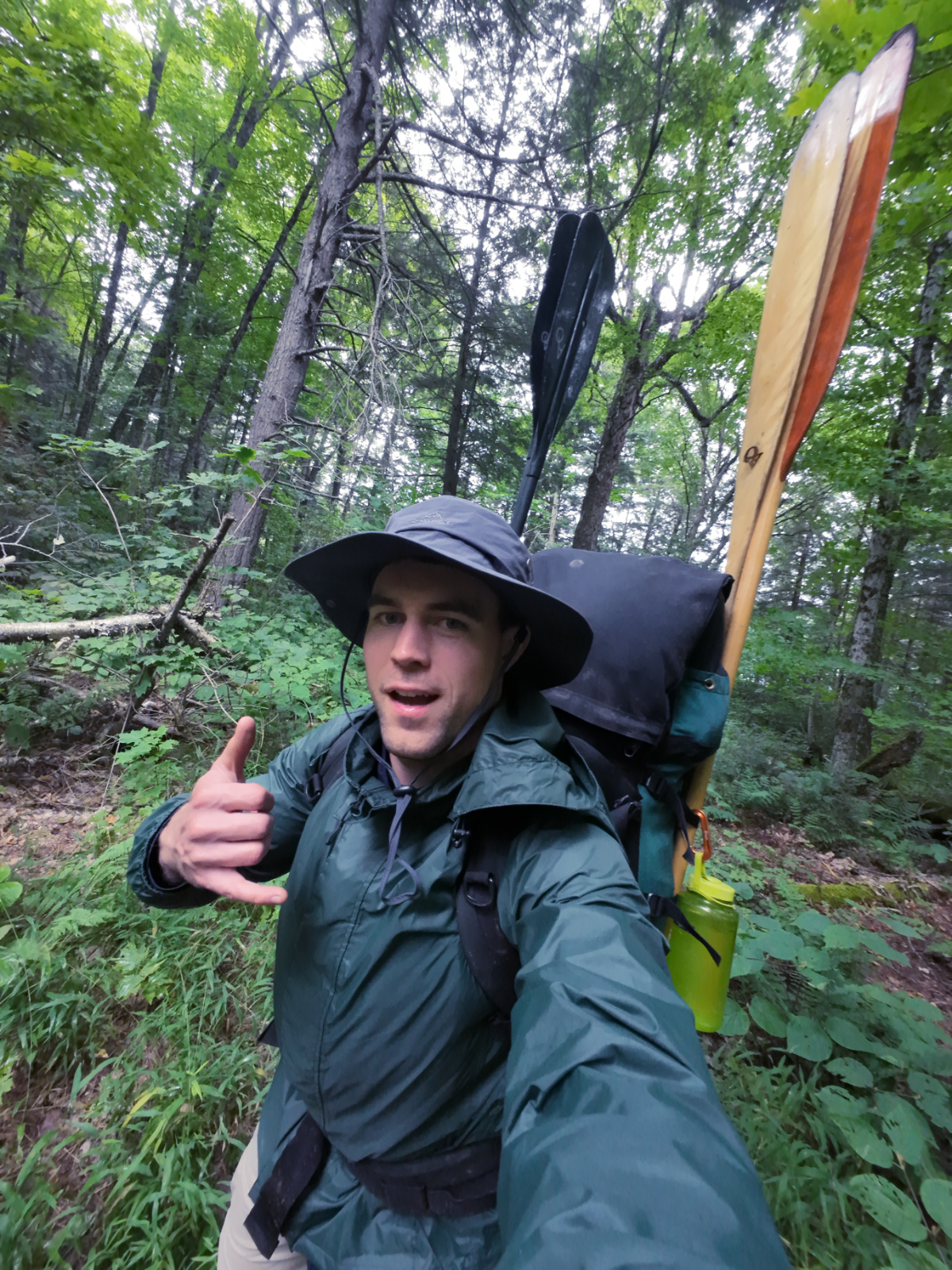 (Paddles were slid into the sides of our packs.)
I train regularly for a hybrid sport called DEKA. I'll discuss DEKA more in a later post, but this type of training really served me well for this trip. Each zone in DEKA is a functional movement and almost each underlying movement in those zones showed up during the journey through Algonquin.
However, the one exercise I had never considered was carrying literal yokes. I'm used to jogging with heavy farmer-carries, but outside of a high heart rate and a fatiguing core, that doesn't translate much to carrying a boat and heavy backpack on your shoulders. To fill in those gaps, I've incorporated rucking into my routine and I'm looking into yoke carries.
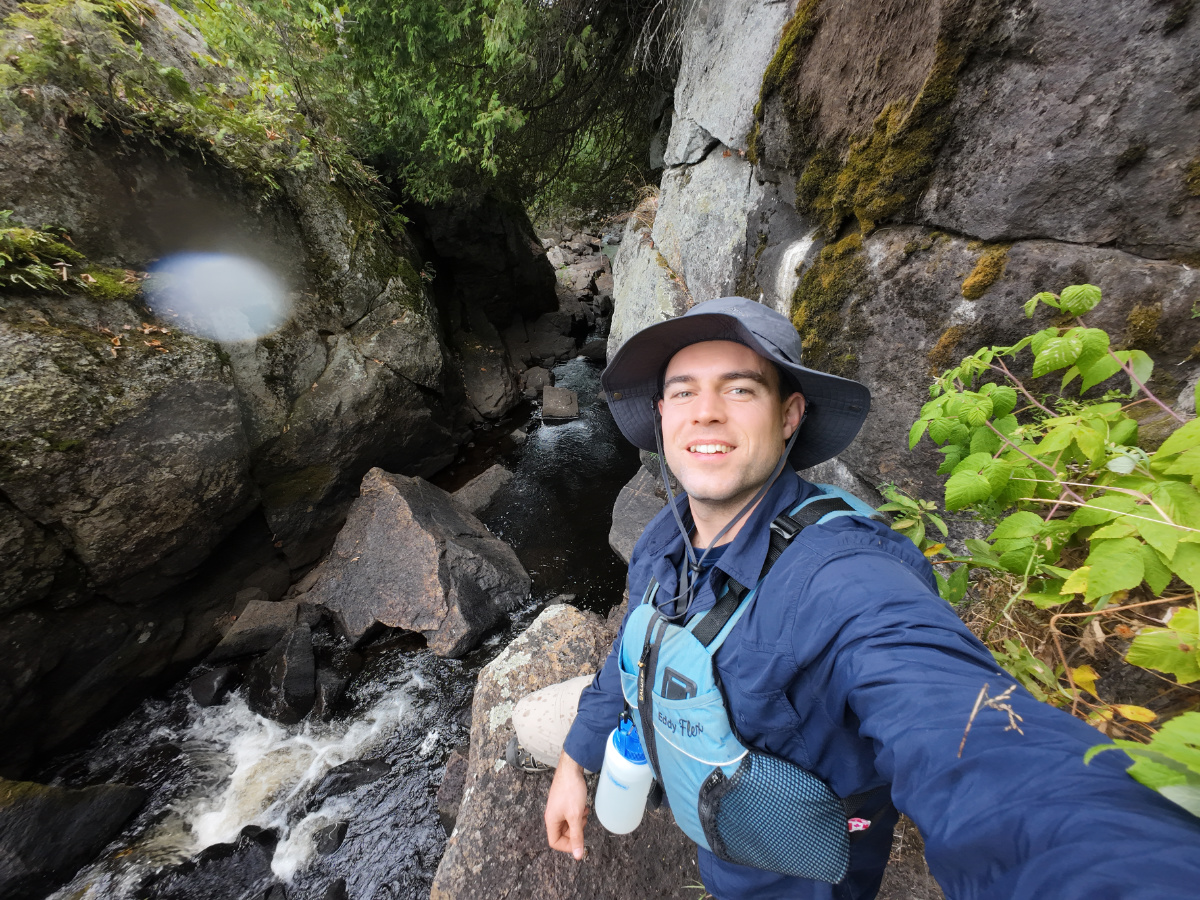 (Hiking through a rocky waterfall during a portage break.)
Portaging Algonquin was an incredible experience. The challenge gave me a chance to apply my training in the literal wilderness, while also revealing gaps I hadn't expected. But the journey also reinforced the joy that comes from shared struggle. Learning alongside a hardworking team—relying on one another and covering for each other when needed—built a deep camaraderie that's difficult to replicate any other way.